Smoke Control of Stairwells – Importance, Regulations and Technical Requirements
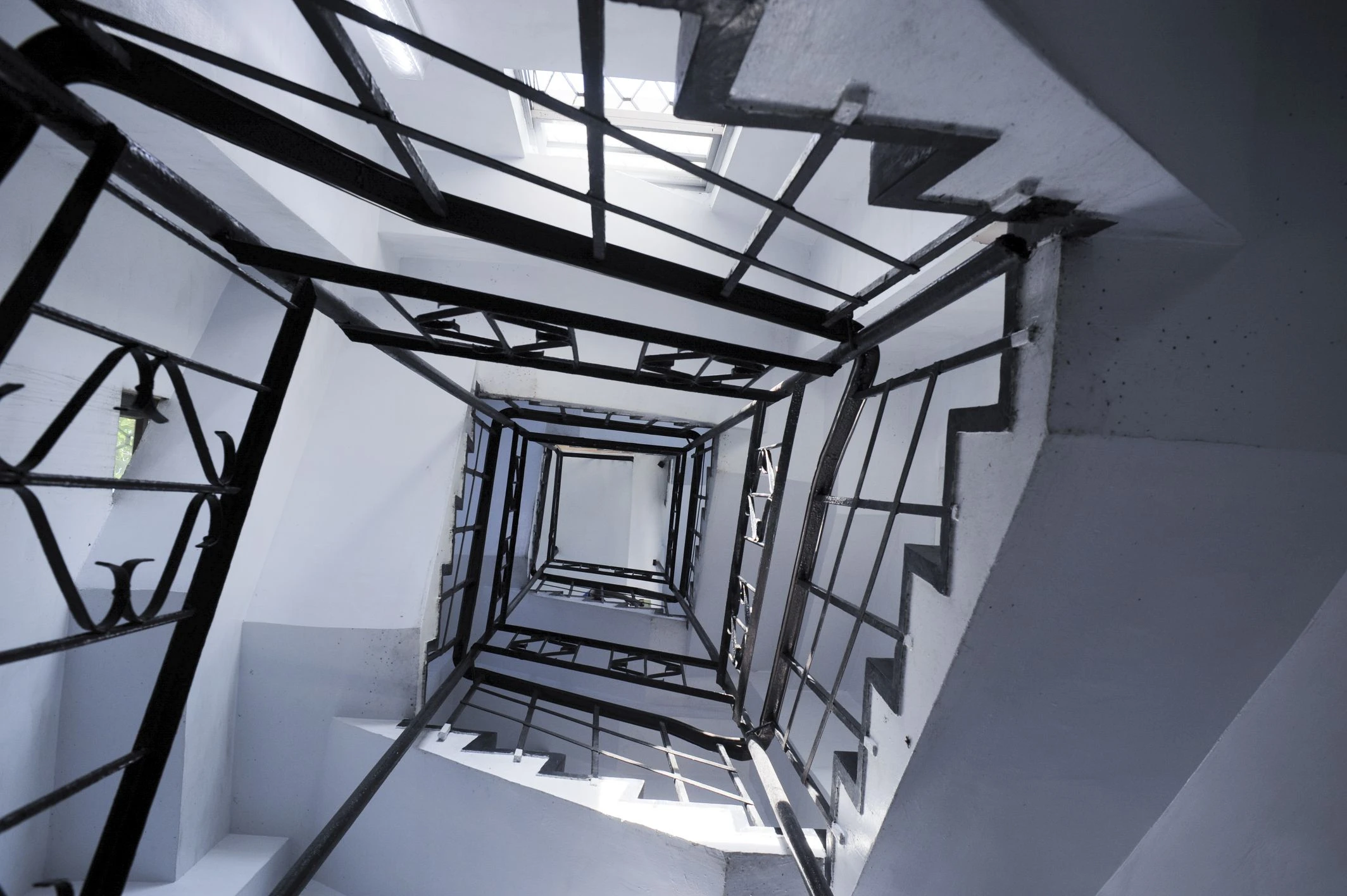
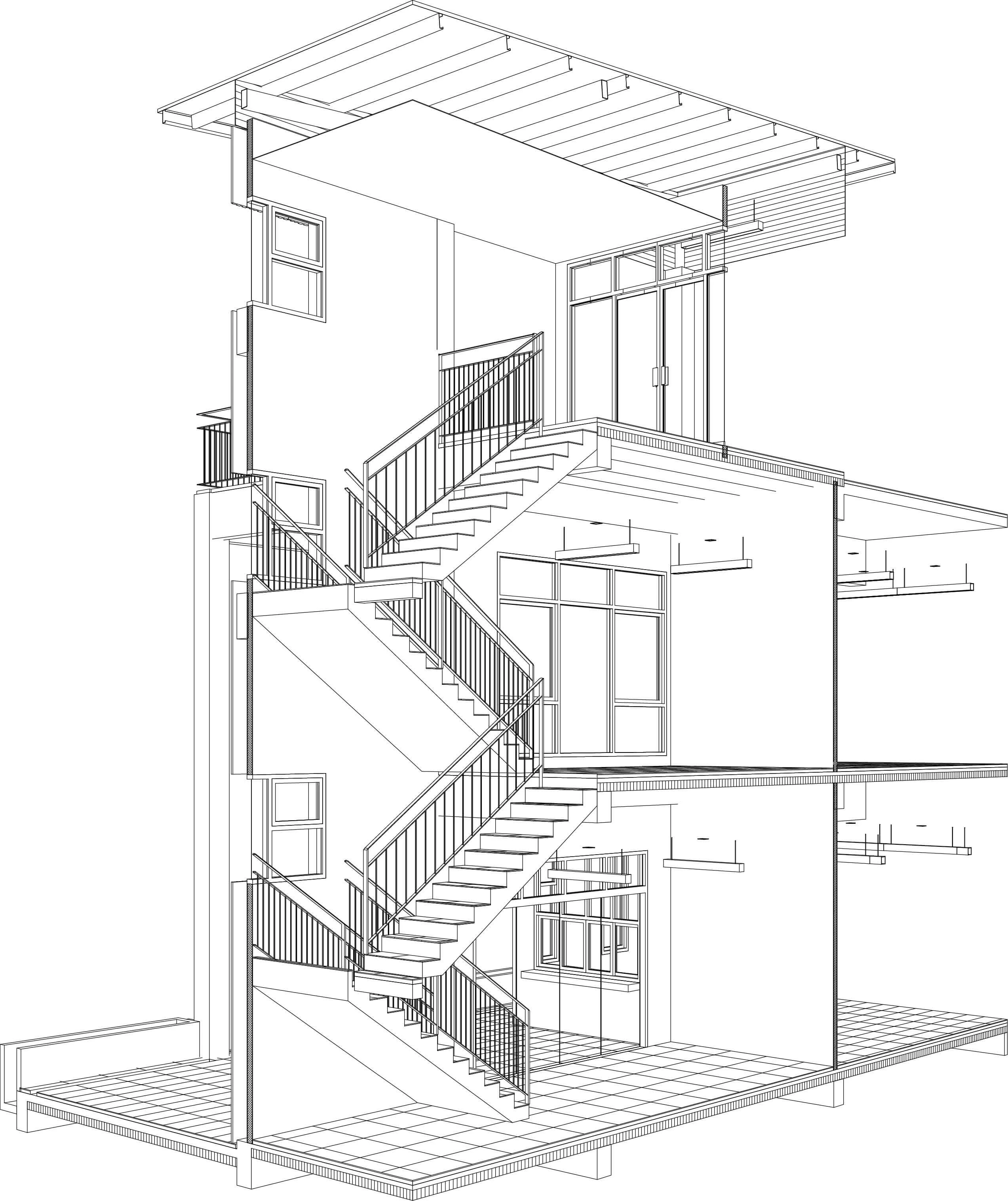
Stairwells in multi-storey buildings play a central role in fire safety. They serve as vertical escape routes for building occupants.
In the event of a fire, protecting this area from smoke and toxic gases is of the highest priority.
Smoke exhaust systems are an essential element of fire ventilation and are standardly applied along vertical escape routes in multi-storey buildings.
Objectives of a Properly Designed Smoke Control System
A correctly designed smoke control system fulfils two primary functions:
- Protection of evacuation – providing occupants with safe conditions to leave the building.
- Support of rescue operations – facilitating access to the fire source for fire brigade teams, in particular by improving visibility, reducing temperature and lowering the concentration of harmful substances.
Types of Stairwell Smoke Control Systems
Taking the above requirements into account, two main types of smoke protection and smoke control systems can be distinguished:
-
Smoke exhaust system (natural or natural with mechanical make-up air)
A system that removes smoke entering the stairwell to the outside during evacuation. -
Smoke protection system (pressure differential system)
A system that prevents smoke ingress by creating a pressure difference between the fire compartment and the protected area.
Natural Smoke Control System for Stairwells
A natural smoke and heat exhaust system is based on a physical process – convection. Hot smoke gases rise and can be discharged to the outside through an opening located at the upper part of the stairwell.
Smoke and Heat Exhaust Devices
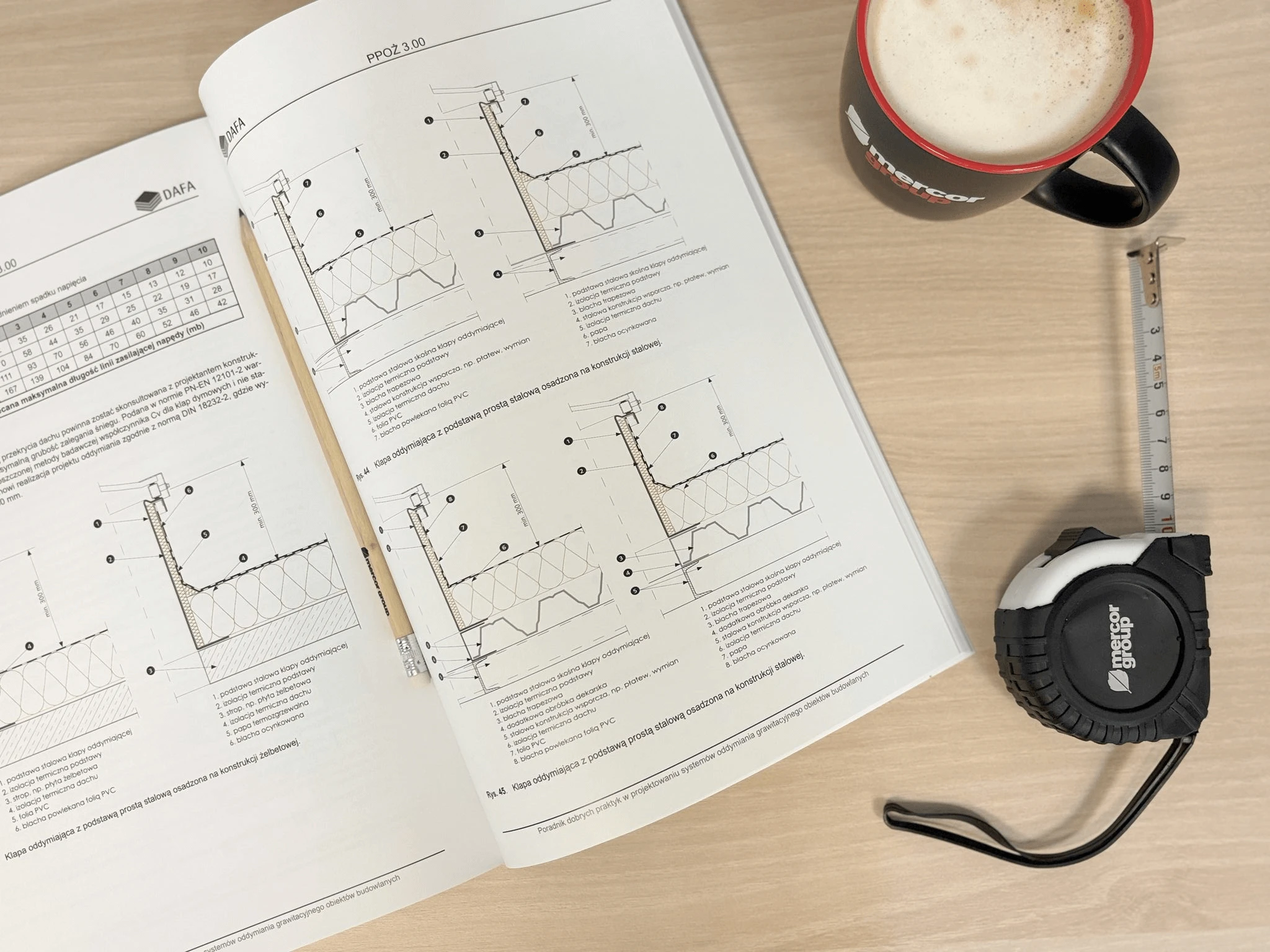
Smoke and heat exhaust devices used for the safe smoke control of buildings are manufactured in accordance with PN-EN 12101-2 – Smoke and heat control systems – Part 2: Natural smoke and heat exhaust ventilators.
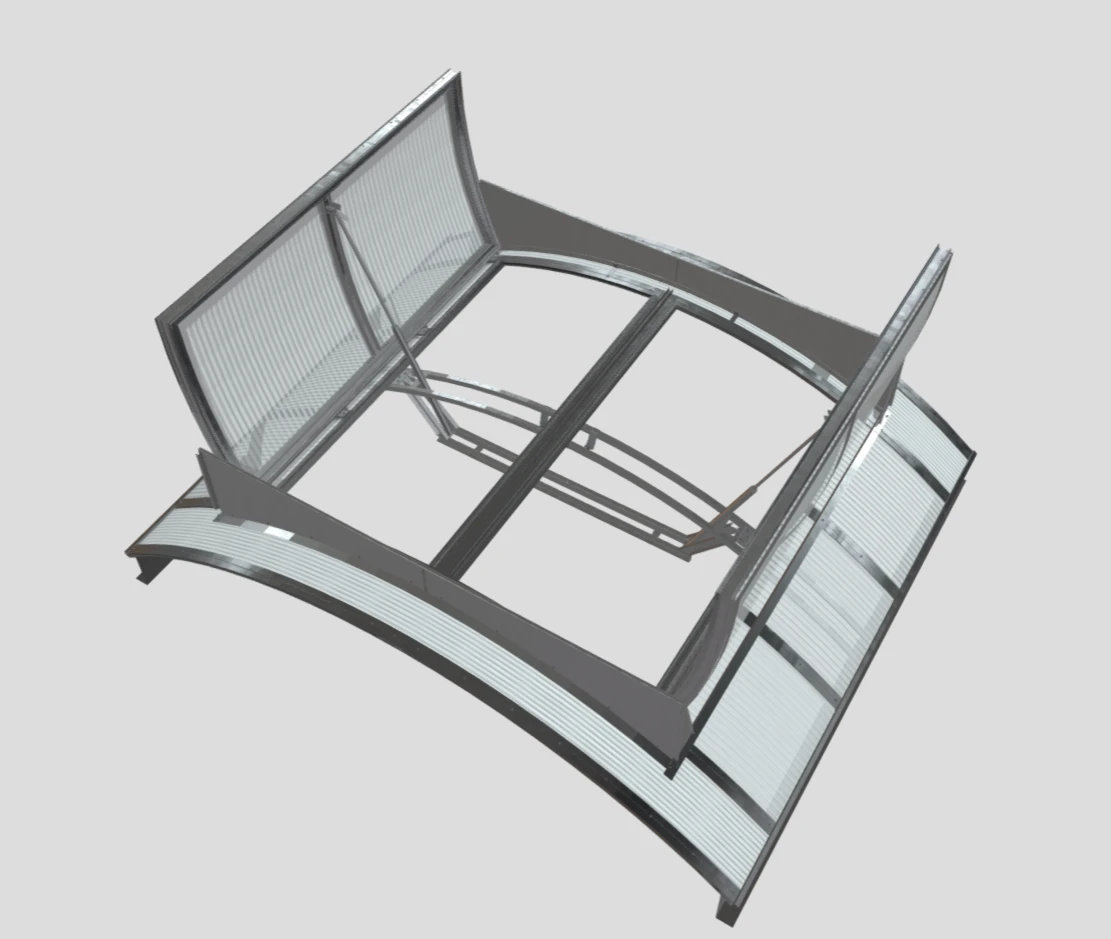
Roof-mounted smoke exhaust devices
These are the most commonly used solutions. The devices are installed on the roof or flat roof at the highest point of the stairwell. They are designed to withstand high wind and snow loads and ensure reliable opening in the event of a fire.
Wall-mounted (side-mounted) smoke exhaust devices
A proven alternative for tall buildings or facilities with mechanical air supply. Installation is carried out in the external walls of the top storey.
Make-up Air Supply Openings
Air supply openings ensure the necessary inflow of replacement air to support effective smoke extraction. Typical solutions include:
- automatically opening main entrance doors,
- automatically opening windows located in the lower part of the stairwell.
In tall buildings or where natural air supply openings are not feasible, a mechanical air supply system is used. The fan must be properly designed in accordance with the parameters of the stairwell.
Control and Power Supply System
System activation
The system can be activated in two ways:
-
Automatically
Via smoke detectors installed in the stairwell and connected to the smoke control panel or the fire detection system. -
Manually
Via smoke control manual call points installed at the stairwell entrance and on the ground floor, the top floor and every third floor.
The smoke control panel ensures simultaneous opening of smoke exhaust and air supply devices. It is equipped with an emergency power supply (batteries) that guarantees system operation for at least 30 minutes after a mains power failure.
Common Errors in the Design and Use of Stairwell Smoke Exhaust Systems
-
Air supply through entrance halls or areas with additional functions
The airflow must not pass through spaces with other uses and must be free from combustible materials. In addition, smoke must not enter from adjacent rooms. -
Excessively long air supply paths
Extended make-up air routes may negatively affect the effectiveness of smoke extraction. -
Air supply from upper storeys
For effective airflow, make-up air openings should always be located at the lowest occupied level. -
Blocked openings
Air supply openings must open automatically and remain open. They must not be blocked by access control systems, other control signals or physical obstructions. -
Smoke exhaust windows located below the top storey
Low placement may lead to smoke accumulation in the upper part of the stairwell and hinder evacuation. Smoke exhaust windows should therefore be installed as high as possible, directly below the roof.
What Determines the Effectiveness of a Natural Smoke Exhaust System in a Stairwell?
A natural smoke control system is an essential part of the fire safety concept. It protects vertical escape routes and enables both safe evacuation of occupants and effective fire brigade operations.
Its performance depends on the interaction of key components:
-
Effective smoke extraction
(using devices with correctly designed aerodynamic free opening areas), -
Reliable supply of make-up air
(natural or mechanical air supply, ideally always at the lowest occupied level), -
Reliable control and emergency power supply
(simultaneous activation of smoke exhaust and make-up air openings).
Even the best system may fail if errors occur during design, installation or operation. Professional design, compliance with applicable regulations and standards, and regular maintenance are essential to ensure reliable operation in an emergency and to protect human life.
This article primarily refers to requirements applicable in Poland; however, many of them are universal. We warmly invite you to consult with MERCOR: export@mercor.com.pl