What Are CFD Simulations in Fire Engineering?
What Are CFD Simulations in Fire Engineering?
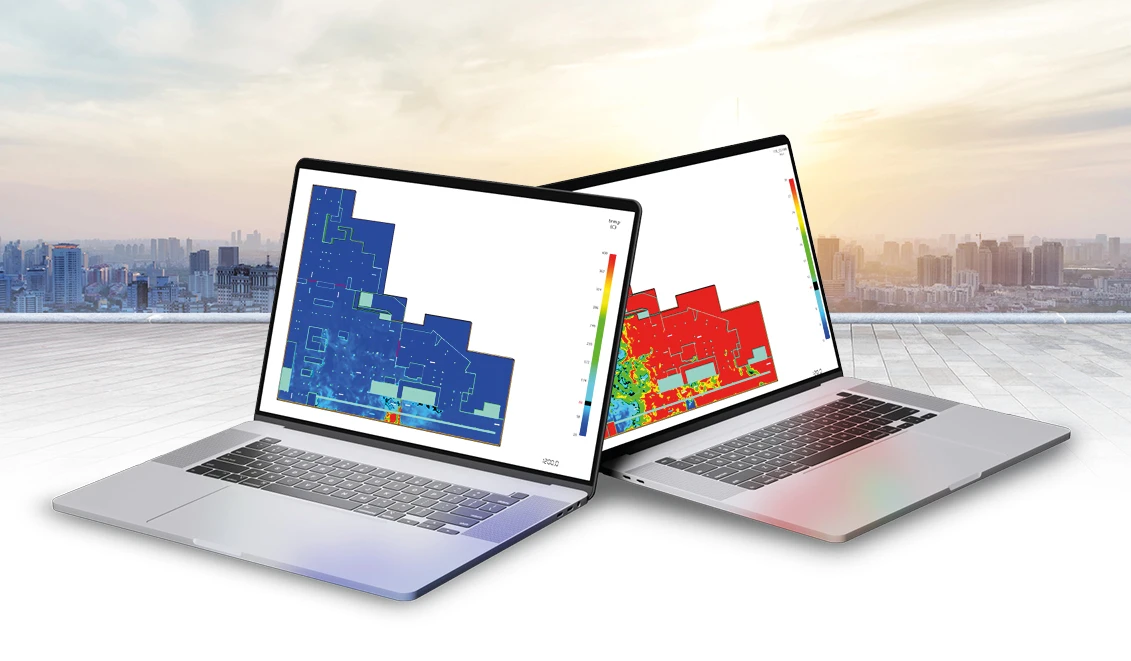
CFD simulations (Computational Fluid Dynamics) have become one of the key tools used in fire engineering in recent years. They enable the numerical modelling of phenomena accompanying the development of a fire, such as smoke spread, hot gas flow, temperature rise, and the interaction of fire with the building structure. Thanks to CFD calculations, it is possible to analyse fire scenarios in a far more detailed and realistic manner than with traditional calculation methods.
CFD simulations are based on equations describing fluid, gas and liquid dynamics, including the Navier–Stokes equations. These simulations provide essential information required to design safe smoke control systems that ensure safe evacuation conditions and appropriate criteria for rescue and firefighting operations. Computer analyses allow three-dimensional modelling of the behaviour of smoke, heat and combustion products, enabling the assessment of fire conditions in complex architectural structures.
When Are CFD Simulations Used?
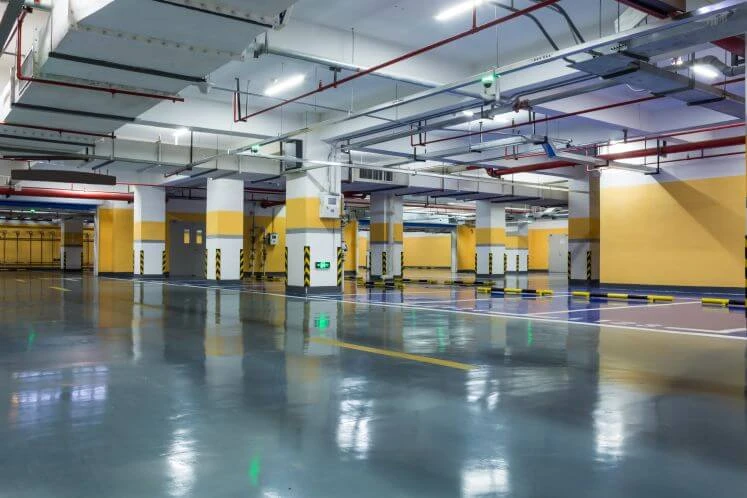
CFD simulations are a practical tool that makes it possible to understand fire dynamics and combustion processes at the design stage. They are primarily used to verify the correctness of design assumptions for smoke control systems, both natural and mechanical, including jet ventilation systems in underground car parks.
After the simulations have been completed, the designer is able to assess the effectiveness of smoke extraction and ventilation systems as well as the fire safety level of the analysed building.
By evaluating the behaviour of smoke and fire within the designed volume, it is possible to analyse safe evacuation conditions by verifying visibility, temperature, concentrations of toxic gases and thermal radiation. An important aspect is also the assessment of safety conditions for rescue teams during firefighting operations, through verification of temperature levels and thermal radiation.
CFD simulations allow the assessment of fire development over time and the prediction of interactions between fire and the building structure, including the impact of high temperatures on the load-bearing capacity of building partitions and floors. During the analysis, it is also possible to verify the interaction between smoke control systems and firefighting systems such as sprinklers, water spray systems or water mist systems, which contribute to temperature reduction. Another element verified during simulations is the correctness of smoke curtain locations and the fire resistance of smoke exhaust fans.
After completing CFD simulations, potential weaknesses in the designed smoke control system can be identified, eliminated and the design assumptions improved. In some cases, an additional benefit of the analysis is the reduction in the number of system components, leading to cost optimisation.
Examples of CFD Simulation Applications
CFD simulations, as an element of a building’s fire safety strategy, are used in the design of facilities with various functions, including:
- underground car parks, to analyse the effectiveness of smoke ventilation systems, both ducted and jet ventilation,
- stairwells, through analysis of visibility and the rate of smoke removal from the stair enclosure,
- production and warehouse halls, to analyse smoke spread and assess the smoke-free layer,
- entertainment and assembly buildings,
- shopping centres,
- road tunnels and metro stations.
How to Design an Effective Smoke Control System?
When designing smoke control systems, the fundamental aspect is compliance with applicable regulations and standards, depending on the type of installation and the analysed space. One of the most important factors in designing an effective smoke control system is an individual approach to the specific building, taking into account its architecture, structural possibilities, as well as the function and classification of the facility.
A crucial stage is the selection of an appropriate smoke control system. Three main groups of solutions can be distinguished:
- natural systems, e.g. using smoke vents, doors, windows or air supply louvres,
- mechanical systems, using smoke exhaust fans,
- hybrid systems, for example applied in stairwells, using air supply fans to direct smoke flow towards a smoke vent.
A key parameter influencing the effectiveness of a smoke control installation is its capacity. Another important aspect is the correct location of supply and exhaust points and their effective area, determined based on maximum air velocity limits. When designing smoke control for underground car parks, the location and number of evacuation exits, evacuation travel distances and the possibility of dividing the car park into smoke zones must be considered.
At the design stage, a detailed control matrix should be developed, defining the sequence of operation of individual devices and their activation times. The control matrix must be consistent with the fire scenario.
Verification of the adopted design assumptions for smoke control systems is carried out using CFD simulations. The first step is to reproduce the building architecture by creating a three-dimensional model and defining the supply and exhaust points assumed in the design. The next step is to define the type of combustible material and input its characteristic parameters. Introducing an appropriate fire power curve and defining the simulation duration are further elements in the process of creating a comprehensive analysis.
The role of the CFD analyst is to locate fire scenarios in the most unfavourable areas, such as at the boundaries of smoke zones, in locations furthest from exhaust points, or near smoke exhaust shafts, in order to verify the fire resistance of smoke exhaust fans. Only this approach ensures reliable results. The final stage is the adoption of assessment criteria, including visibility, temperature, concentration of toxic gases and thermal radiation.
A key aspect is close cooperation at every design stage with a certified fire safety engineer in order to verify the adopted assumptions.
A properly designed smoke control system must enable safe evacuation and provide suitable conditions for rescue and firefighting operations.
Agnieszka Jabłońska
Designer
Fire Ventilation Systems Division